Introduction
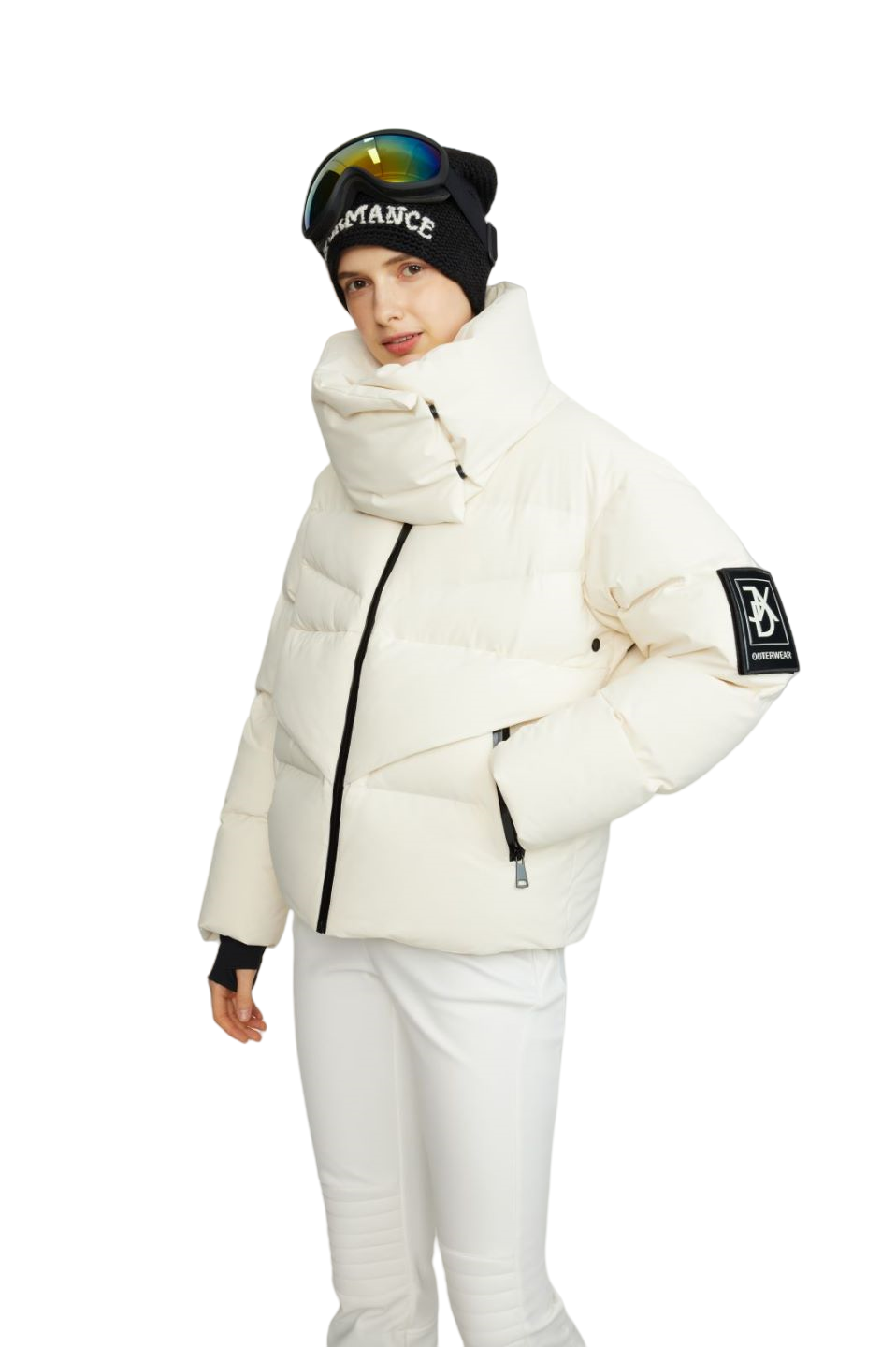
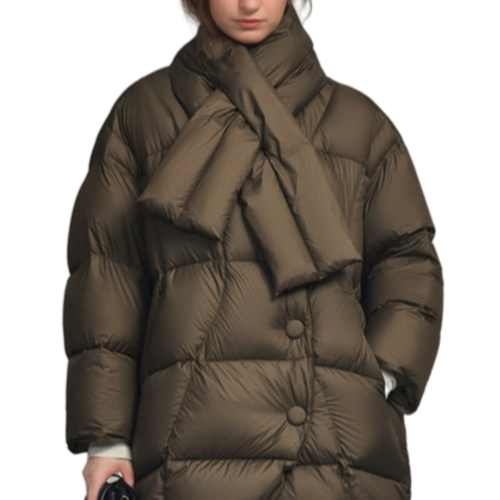
Warmth in winter is not just about choosing the thickest coat. When people ask what the warmest Puffer Coat is, they usually want a clear and practical answer they can trust. In most real cold-weather settings, the warmest option is often a long down parka with strong loft, smart construction, and solid protection against wind and moisture. But warmth also depends on more than one number on a product page. In this article, you will learn how insulation, coat length, baffle design, and protective features work together, so you can understand what truly makes a Puffer Coat feel warm in everyday use.
What Type of Puffer Coat Is the Warmest?
Why a Down Puffer Coat Usually Delivers the Highest Warmth
A down Puffer Coat is usually the warmest choice because down traps a large amount of still air without adding much bulk. That is why premium winter parkas often rely on goose or duck down instead of synthetic fill. Patagonia explains that higher-quality down improves warmth-to-weight efficiency, while Arc’teryx also notes that down stands out for packability and strong insulating performance in cold, dry weather. In simple terms, if your goal is maximum warmth from a coat, down usually leads the field.
How Parka-Length Puffer Coat Designs Increase Full-Body Warmth
Length changes warmth in a big way. A parka-length Puffer Coat covers more of your core, hips, and upper legs, so less body heat escapes when wind hits or when you stand outside for long periods. That extra coverage also reduces gaps around the waist, which is often where shorter jackets lose heat fast. Canada Goose’s warmth system centers many of its highest-warmth pieces around parka designs, which supports the idea that longer coverage is a major part of cold-weather performance.
Why Box-Baffle Construction Makes a Puffer Coat Warmer Than Basic Sewn-Through Styles
Construction matters as much as insulation type. In a sewn-through design, stitching compresses the insulation at each seam, which can create cooler zones across the coat. Box-wall or box-baffle construction keeps the inner and outer layers separated, so the down can loft more fully and hold heat more evenly. Rab describes boxwall baffles as a way to reduce cold spots, and its ultra-warm down pieces use that design to maximize loft and warmth. That is why the warmest Puffer Coat styles often use box baffles instead of basic quilting.
note: For buyers comparing premium winter outerwear, coat length and baffle design often explain warmth better than a single fill power number.

Which Puffer Coat Features Matter Most for Maximum Warmth?
Fill Power vs. Fill Weight in a Warm Puffer Coat
Many shoppers focus on fill power first, but it does not tell the full story. REI explains that a jacket with very high fill power can still be less warm than one with lower fill power if it contains less actual down. Patagonia makes the same distinction by separating fill power from fill weight. Fill power shows the loft efficiency of the down, while fill weight shows how much insulation is inside the coat. A truly warm Puffer Coat needs the right balance of both.
How Loft, Baffle Size, and Insulation Distribution Affect Puffer Coat Warmth
Warmth depends on trapped air, and trapped air depends on loft. A Puffer Coat that looks puffier often feels warmer because more loft means more air held inside the insulation. REI notes that thicker or puffier jackets are generally warmer, while baffle design affects how evenly that insulation stays in place. Large, well-managed chambers help the coat hold warmth across the body instead of leaving thinner zones in key areas. A warm coat is not just filled well. It is filled smartly.
Why a Hood, Draft Collar, and Longer Hem Make a Puffer Coat Feel Warmer
Warmth is also about heat retention at openings. A good hood protects the head and neck, an internal draft collar helps trap warm air near the upper body, and a longer hem reduces cold air entry below the waist. Arc’teryx lists technical winter features such as insulated hoods, elastic cuffs, and two-way zippers as key parts of winter jacket performance. In practice, these details help a Puffer Coat feel warmer because they reduce heat loss during actual use, especially in wind.
| Feature | Why It Helps a Puffer Coat Stay Warm |
| High-quality down | Traps more heat for less weight |
| Adequate fill weight | Adds real insulation quantity |
| Box-baffle design | Helps reduce cold spots |
| Parka length | Covers more of the body |
| Hood and draft protection | Reduces heat loss at openings |
| Wind-resistant shell | Helps preserve trapped warm air |
tip: In B2B product pages, explain fill power and fill weight together. It builds trust and helps buyers compare models faster.
Down Puffer Coat vs. Synthetic Puffer Coat for Cold Weather
When a Down Puffer Coat Is the Warmest Choice
If conditions are cold and fairly dry, a down Puffer Coat is usually the warmest option. Down offers excellent loft, strong compressibility, and a high warmth-to-weight ratio. That combination makes it the top choice for deep-winter commuting, travel to cold cities, and long outdoor exposure in dry air. Patagonia and Arc’teryx both position down as the premium solution when users want maximum warmth without extreme bulk. For many buyers, that makes a down parka the clear answer to the warmest coat question.
When a Synthetic Puffer Coat Performs Better in Wet Winter Conditions
Synthetic insulation becomes especially useful in damp cold, mixed snow, or wet winter weather. Patagonia says synthetic fill keeps warming performance when wet, and REI also highlights its quick-drying, damp-weather advantages. That does not change the general answer about the warmest Puffer Coat overall, but it does shape the best choice for some climates. In a coastal city or a wet work environment, a well-built synthetic coat can feel more dependable day after day because it handles moisture so well.
How to Choose the Best Puffer Coat Based on Climate, Not Just Insulation Type
The best winter coat is not chosen by insulation alone. It should match local weather, daily use, and exposure time. In dry inland cold, down usually wins for pure warmth. In wet snow or slushy urban winters, synthetic or hybrid designs can be a smart choice. Arc’teryx advises buyers to think about insulation type, weather protection, and intended activity together. That is the right way to evaluate any Puffer Coat. Warmth works best when the material and the environment fit each other.
note: For wholesale and private-label planning, climate-specific positioning often converts better than broad “warmest” claims.
How to Identify the Warmest Puffer Coat Without Guesswork
What Product Specs Reveal About a Puffer Coat’s Real Warmth
The best specs tell a fuller story. Start with insulation type, then look for fill power, fill weight, length, and construction. REI makes it clear that fill power alone cannot measure warmth, and many brands do not publish fill weight at all. When they do, buyers get a much clearer picture of actual insulation volume. A Puffer Coat that lists both quality and quantity feels more credible and easier to compare across brands or collections.
Why Temperature Ratings and Brand Warmth Scales Can Help Compare a Puffer Coat
Unlike sleeping bags, insulated jackets usually do not have one universal warmth rating. REI points this out directly, which is why brand systems can still be useful. Canada Goose uses its Thermal Experience Index to sort pieces from light insulation to its warmest parkas. While brand scales are not universal standards, they can still help shoppers compare products inside one range. For a Puffer Coat shopper, that turns vague warmth language into a more practical buying tool.
How to Read Marketing Claims About a Puffer Coat More Critically
The smartest buyers look past a single headline claim. A coat can advertise 800-fill or 900-fill down and still be built for light use if the total fill is low or the design is short and lightly baffled. A warmer Puffer Coat usually pairs strong specs with visible structure: more loft, more coverage, and stronger weather features. When claims about warmth appear, compare them against construction details and intended use. That approach is more useful than relying on one number or one slogan.
What Is the Best Puffer Coat Length for Staying Warm?
Cropped and Hip-Length Puffer Coat Styles for Light Winter Use
A cropped or hip-length Puffer Coat works well for mobility, short trips, and mild winter conditions. It is easy to wear in the city, simple to layer, and often less bulky indoors. Still, its main strength is convenience rather than maximum cold blocking. When warmth is the priority, shorter cuts leave more of the hips and thighs exposed. They serve everyday transitional winter use very well, but they are not usually the warmest category in a lineup.
Mid-Thigh Puffer Coat Options for Everyday Cold-Weather Balance
Mid-thigh designs offer a strong middle ground. They provide more protection than short puffers while staying easier to walk in than full-length parkas. For many people, this is the most practical everyday Puffer Coat length because it adds useful coverage without feeling too heavy for routine wear. In normal urban winter use, that extra drop below the hips often gives a noticeable warmth boost, especially when paired with a hood and solid wind protection.
Full-Length Puffer Coat and Parka Styles for Deep Winter Warmth
When warmth comes first, full-length and parka-length styles usually lead. More coverage means fewer exposed areas and better heat retention during long waits, outdoor work, or severe cold snaps. Canada Goose places its highest-warmth identity around heavy-duty parkas, which fits what many winter buyers already know from experience. If the goal is the warmest Puffer Coat category, longer parkas sit at the top because they protect more of the body in real weather.
tip: If you sell to cold-region retailers, separate short puffers from parkas in product architecture. Buyers shop them for different winter jobs.
How to Choose the Right Warm Puffer Coat for Different Winter Needs
The Best Puffer Coat for City Commuting and Daily Wear
For commuting, the best Puffer Coat balances warmth, comfort, and easy movement. A mid-thigh or parka-length design with down insulation, a protective hood, and a wind-resistant shell usually fits daily winter life very well. It should feel warm at the bus stop, easy in the car, and comfortable on the sidewalk. In this use case, strong heat retention matters, but so does wearability. The ideal coat is warm enough for routine exposure without feeling overly technical or restrictive.
The Best Puffer Coat for Extreme Cold, Wind, and Long Outdoor Exposure
For extended time outside, look for the features that support real cold endurance: high-loft down, longer coverage, box-baffle construction, and strong shell protection. Rab’s ultra-warm down jackets show how boxwall construction, premium down, and weather-ready outer fabrics work together to reduce cold spots and support deep-cold use. A heavy-duty Puffer Coat in this group is built for serious winter conditions, not just short daily walks. That is where construction and coverage make the biggest difference.
The Best Puffer Coat for Travel, Layering, and Versatile Winter Use
Travel buyers often want a coat that packs well but still feels warm when they arrive. Down remains a strong choice because of its compressibility and warmth-to-weight efficiency. Patagonia highlights this strength across its down range, and REI also points to the benefits of lightweight insulated outerwear for portability. A versatile Puffer Coat for travel should be warm enough for changing conditions, easy to layer over a sweater, and not too bulky for transit or storage.

How to Make Any Puffer Coat Feel Warmer in Real Life
How Base Layers and Midlayers Improve Puffer Coat Performance
A warm coat works better when the layers under it work too. Patagonia’s cold-weather layering guide recommends a base layer, a midlayer, and an outer layer as a system. That means even a strong Puffer Coat performs better when it is not doing all the work alone. A base layer helps manage moisture next to the skin, while a midlayer adds warmth and helps the outer coat hold heat more effectively. Good layering often changes how warm the same coat feels.
Why Fit, Cuff Design, and Wind Blocking Matter in a Puffer Coat
Warmth is not only about insulation. It is also about how well the coat seals in heat. If a Puffer Coat is too tight, the insulation cannot loft well. If it is too loose around the cuffs, neck, or hem, cold air enters and warm air escapes. Arc’teryx lists windproof materials, insulated hoods, elastic cuffs, and technical closures as core winter jacket features for a reason. These details help the coat keep its warmth when winter weather turns sharp and windy.
How Proper Care Helps a Puffer Coat Maintain Loft and Warmth
Proper care keeps a Puffer Coat warm by protecting loft, insulation spacing, and surface repellency. Brand and gear-care guides agree on a few core rules: gentle washing, thorough rinsing, long low-heat drying, and loose storage. The practical details below make those steps easier to apply correctly.
| Care Stage | Application / When to Use | Recommended Method | Technical Indicators / Parameters | Why It Supports Loft and Warmth | Key Precautions |
| Pre-wash inspection | Before any wash cycle | Read the care label, zip closures, close fasteners, and wash items individually | 1 garment at a time is recommended by The North Face for down items; Nikwax allows max 2 garments for clothing in a front-loader | Reduces abrasion, uneven agitation, and insulation migration | Do not overload the drum; crowded loads reduce rinse quality and raise stress on baffles |
| Washer type selection | For routine machine cleaning | Use a front-loading machine where possible | The North Face says front-loading machine only for down due to lower risk to internal construction; Patagonia’s care article also prefers a front-load washer | Gentler drum action helps protect baffle seams and insulation structure | Avoid top-load agitators when possible; they can damage internal construction |
| Water temperature | Standard cleaning of down-filled coats | Use warm/cold water on a gentle or normal cycle, depending on label | Nikwax specifies warm/cold water; The North Face states warm water on a gentle cycle for down products | Helps remove oils and dirt that collapse loft and reduce breathability | Do not improvise hot-water washing unless the garment label permits it |
| Wash cycle setting | When cleaning body-oil buildup, dirt, and odor | Choose gentle cycle or normal cycle with slow spin | Nikwax: slow spin, extra rinse if possible; The North Face: gentle cycle for down | Lower mechanical stress helps preserve baffle stability and down distribution | Fast spin while the item is water-heavy may stress or break internal baffles |
| Cleaner type | Every down-coat wash | Use a down-specific cleaner rather than standard detergent | Nikwax states conventional detergents leave hydrophilic residue and can reduce loft; Patagonia’s care guidance also points users to down-specific soap | Specialized cleaners remove oils without stripping down performance or masking DWR | Do not use fabric softener or bleach; Patagonia and The North Face both prohibit them |
| Cleaner dosage | If using Nikwax Down Wash | Follow product dosage closely | Nikwax front-loader dosage for clothing: 3.5 fl oz / 100 mL; for sleeping bags: 5 fl oz / 150 mL; hand wash ratio: 3.5 fl oz / 100 mL per 3–4 gal / 12–15 L water | Correct dosage improves soil removal without leaving residue that hurts loft | More cleaner is not better; excess product raises rinse burden |
| Rinsing | After every wash | Run a full rinse, and add extra rinse if needed | REI says to wash and rinse thoroughly; The North Face advises repeating the rinse cycle; Nikwax also recommends extra rinse if possible | Soap residue reduces loft, water repellency, and insulating performance | Incomplete rinsing can leave the coat feeling flat even after drying |
| Water removal before drying | Immediately after wash | Add an extra spin or several slow spins | The North Face recommends an extra spin cycle; Nikwax recommends slow spin dry multiple times, increasing speed gradually only as water load drops | Removes water mass so drying becomes more even and less stressful on seams | Do not lift a soaked down item by one point; The North Face says to scoop it from the bottom |
| Dryer heat level | Main drying stage | Tumble dry on low heat, very low heat, or no heat / air only, depending on label and brand guidance | REI: low heat; The North Face: no heat for down; Nikwax: air only or low heat; Patagonia also references low heat drying in care guidance | Slow, controlled drying restores loft without overheating shell fabrics or trims | Always follow the garment’s sewn-in care label when brand guidance differs |
| Dryer duration | Until all clumps disappear | Use long cycles and reset as needed | REI states drying may take 1–3 hours; The North Face says tumble dry over a long period | Full drying is critical because damp down cannot trap air well | Stop only when the coat is fully dry and lump-free; partial drying leaves cold spots |
| Loft restoration during drying | When down looks clumpy after wash | Add 1–2 clean tennis balls or equivalent and manually break clumps if needed | REI recommends 1–2 clean tennis balls; The North Face notes experienced washers sometimes add tennis balls; Nikwax advises repeatedly teasing apart clumps during drying | Mechanical agitation helps separate wet clusters and rebuild even loft | Use only clean dryer aids; dirty balls can transfer odor or residue |
| Storage between wears | Off-season or long gaps | Store on a hanger or loosely in a large breathable space | REI advises storing a down jacket on a hanger, not in a tight stuff sack | Prevents long-term compression, which makes down more resistant to re-lofting | Avoid tight compression for weeks or months; repeated crushing reduces recovery |
| Moisture control in storage | After cleaning or winter season close | Store only when fully dry, in a dry location | The North Face says items should be completely dry before storing; Nikwax warns that leaving down wet or damp can ruin it completely | Dry storage protects loft, shell fabric, and odor control | Never bag a damp coat after travel or washing |
| DWR maintenance | When outer fabric starts wetting out | Clean first, then use a down-safe reproofer if needed | Nikwax says dirt and detergent residues compromise DWR and that cleaning can restore performance; after heavy use, Down Proof may be needed after washing | A functioning DWR helps stop outer-fabric wet-out, so insulation stays drier and warmer | Do not apply standard waterproofing products that are not approved for down items |
| Hand washing | Only when machine washing is not possible and label allows it | Use careful immersion and full rinse | Nikwax hand-wash guidance: 3.5 fl oz / 100 mL in 3–4 gal / 12–15 L warm water, 5-minute soak, then rinse until water runs clear | Useful when equipment is limited and done gently | The North Face does not recommend bathtub hand washing for down because soap often remains and wet weight can stress shell and baffles |
| When cleaning becomes necessary | Periodic maintenance | Clean when body oils, dirt, and wet-out start affecting performance | The North Face says periodic cleaning is essential to maintain maximum loft; Nikwax explains dirt and body oils attract water and reduce insulation efficiency | Clean insulation traps more air and keeps surface repellency working better | Do not wait until the coat is visibly dirty if warmth and loft are already dropping |
Tip:For product education or B2B content, the most useful care message is simple: clean gently, rinse fully, dry for a long time, and store uncompressed. Those four points are the clearest link between garment care, loft recovery, and real thermal performance.
Conclusion
The warmest Puffer Coat is usually a long down parka with strong loft, warm-focused construction, and wind-blocking details. The right choice still depends on climate, coverage, and insulation performance in real use. Nanjing JXD-SPY Co., Ltd. delivers value through well-designed outerwear, practical warmth features, and reliable product solutions that help buyers match comfort, function, and winter protection.
FAQ
Q: What is the warmest type of Puffer Coat?
A: A long Puffer Coat with high-fill down is usually the warmest.
Q: Is a down Puffer Coat warmer than synthetic?
A: Yes, a down Puffer Coat often gives better warmth-to-weight performance.
Q: How do I choose the warmest Puffer Coat?
A: Check fill power, coat length, baffle design, and wind-resistant shell fabric.
Q: Why does my Puffer Coat feel less warm?
A: Compressed insulation, poor fit, or wet fill can reduce warmth.